How Light, Minerals & Structured Water Help Calm Psoriatic Skin.
Psoriasis is one of those conditions that can feel frustrating because it’s chronic, it’s visible, and it’s deeply tied to inflammation. As a dermatology pharmacist, I’ve spent years studying not just the pharmacology of psoriasis but also the underlying biology of skin health. What I’ve discovered is that in addition to important systemic protocols involving dietary and digestive health, as well as nutritional supplementation, there are also effective topical strategies utilizing light, water structuring, and minerals that can be applied in a practical way at home. These represent a potentially powerful approach you can use to improve skin comfort, hydration, and appearance by working with your skin’s own bioelectric and water-based systems.
Let’s start with light. Psoriasis lesions are marked by hyperproliferation of keratinocytes, disrupted barrier function, and chronic inflammation. Phototherapy has been a medical treatment for decades because certain wavelengths of light, especially in the UVB range, slow down keratinocyte overgrowth and modulate immune activity. But outside of clinical phototherapy, there’s another dimension of light that’s equally important: red and near-infrared light. These wavelengths penetrate into the dermis and connective tissue, where they energize mitochondria and, just as significantly, expand structured water around collagen and membranes. For a psoriatic plaque, this means light isn’t just calming inflammation; it’s reorganizing the hydration and charge balance in the affected tissue. Think of it as recharging your skin’s bioelectric battery so the tissue can better regulate itself. Incorporating red or near-infrared light can be an elegant, non-invasive way to bring relief and balance to psoriatic skin. Many people describe a soothing, less inflamed feel after sessions, which matches the cellular improvements happening beneath the surface.
Now let’s layer in the role of water structuring. Psoriatic skin is notoriously dry, scaly, and leaky because the barrier is compromised, and the extracellular matrix is disorganized. In healthy skin, water near collagen and other hydrophilic structures forms ordered zones that support energy transfer and stabilize membranes. In psoriatic skin, these zones are diminished or chaotic. By using therapies that encourage EZ water formation, namely light and charged mineral environments, you can help restore some of that lost coherence. This isn’t hydration in the superficial, cosmetic sense. It’s hydration that reorganizes the skin’s very microenvironment. When structured water forms, enzymes function better, redox balance improves, and inflammation signals are modulated. For a condition driven by chronic inflammatory loops, that shift is extremely valuable.
This brings us to minerals. Psoriasis is associated with abnormalities in ionic balance; calcium signaling in particular is disrupted in keratinocytes, which contributes to their abnormal growth pattern. Topically applied ionic mineral polyelectrolytes create a negatively charged, hydrophilic surface that attracts and structures water while also delivering biologically familiar ions like magnesium, calcium, and potassium. These ions help normalize the electrochemical environment in psoriatic tissue. When you apply an ionic mineral-rich mist, you’re essentially giving your skin the scaffolding it needs to reorganize water, regulate ion flow, and reduce the cellular chaos that fuels the plaques. Combine that with red or near-infrared light, and you’ve created a synergistic approach: the minerals provide the scaffold, the light provides the energy, and the skin builds the structured water zones that restore hydration and coherence.
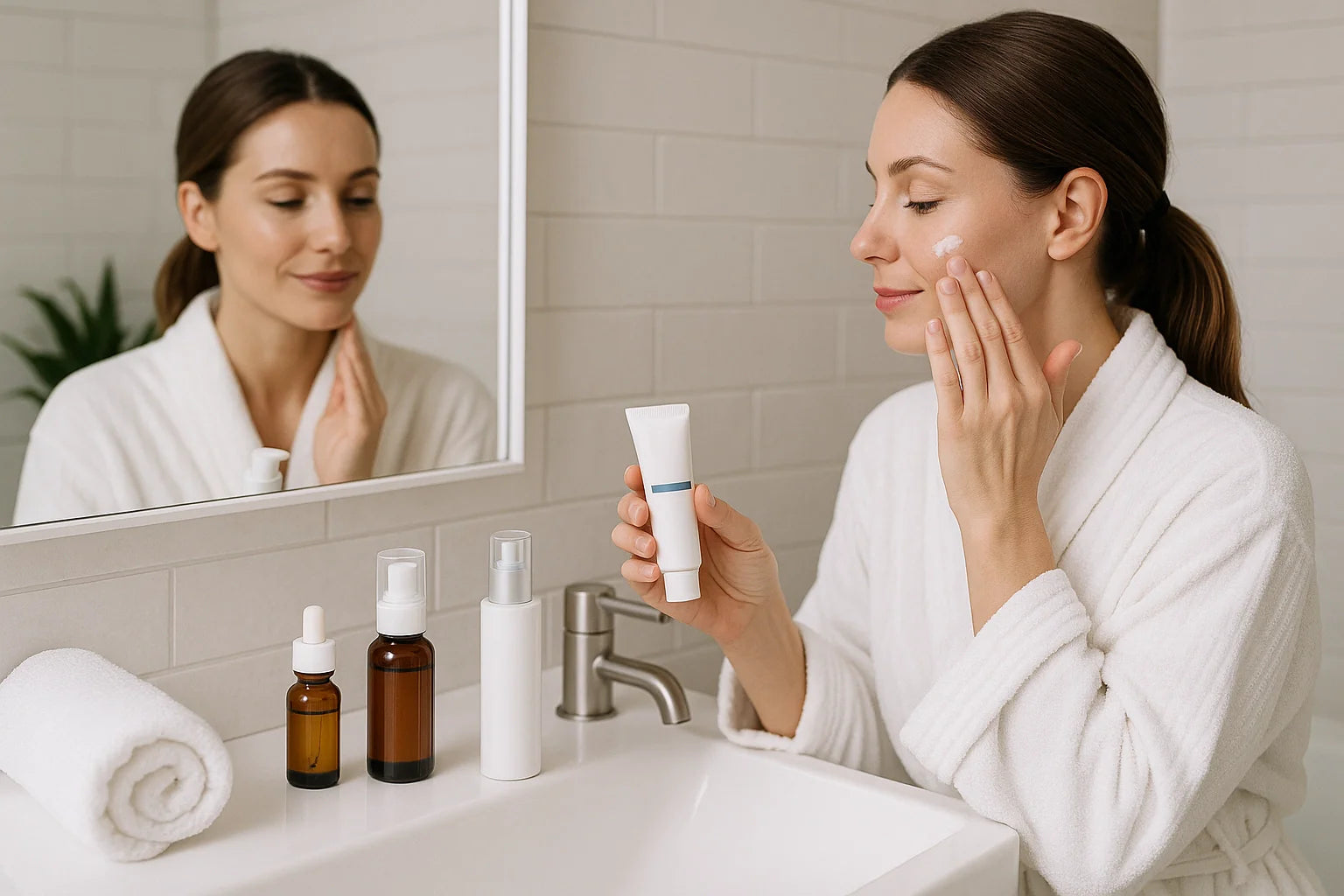
From a practical standpoint, this can look very straightforward in your routine. Begin with gentle cleansing, using lipid-rich, low-foam surfactants and a mild keratolytic like salicylic acid on active plaques. Mist on ionic minerals, making sure to cover the psoriatic areas. Allow the minerals to absorb and interact with the tissue for a few minutes. Then introduce red or near-infrared light for a carefully timed session, depending on your device. The light amplifies the structuring effect of the minerals, expanding EZ water and reducing inflammatory signaling. Finish with topical fatty vitamins, especially Vitamin D and Vitamin C, and try to avoid occluding products that block the skin’s ability to breathe and maintain its charge balance. The goal is not to smother the skin but to energize it and restore its natural coherence.
What you may notice over time is softer plaques, reduced scaling, and less itching or redness. Your skin may feel less tight and more comfortable. While this approach does not “cure” psoriasis, because it’s an autoimmune condition rooted in systemic factors, it can provide a meaningful layer of relief and resilience at the skin level. Supporting your skin with light, water structuring, and minerals can also complement healthy lifestyle habits like safe sunlight exposure, mineral hydration, stress reduction, food and digestive support, and nutritional supplementation, all of which play into the bigger picture.
The takeaway is simple: psoriasis may be complex, but your skin responds to biology. Red and near-infrared light, structured water, and ionic minerals are not abstract concepts. They’re practical, biologically coherent ways to bring comfort, balance, and visible improvement to skin that often feels out of control. And in giving your skin this support, you’re not just improving its appearance, you’re helping restore a sense of ease and confidence in your daily life.
Written by a dermatology pharmacist who believes your skin has the intelligence to heal when given the right support.
Benjamin Knight Fuchs, R.Ph.